
Health & wellbeing
Strength and longevity: what if muscle were your best life insurance?
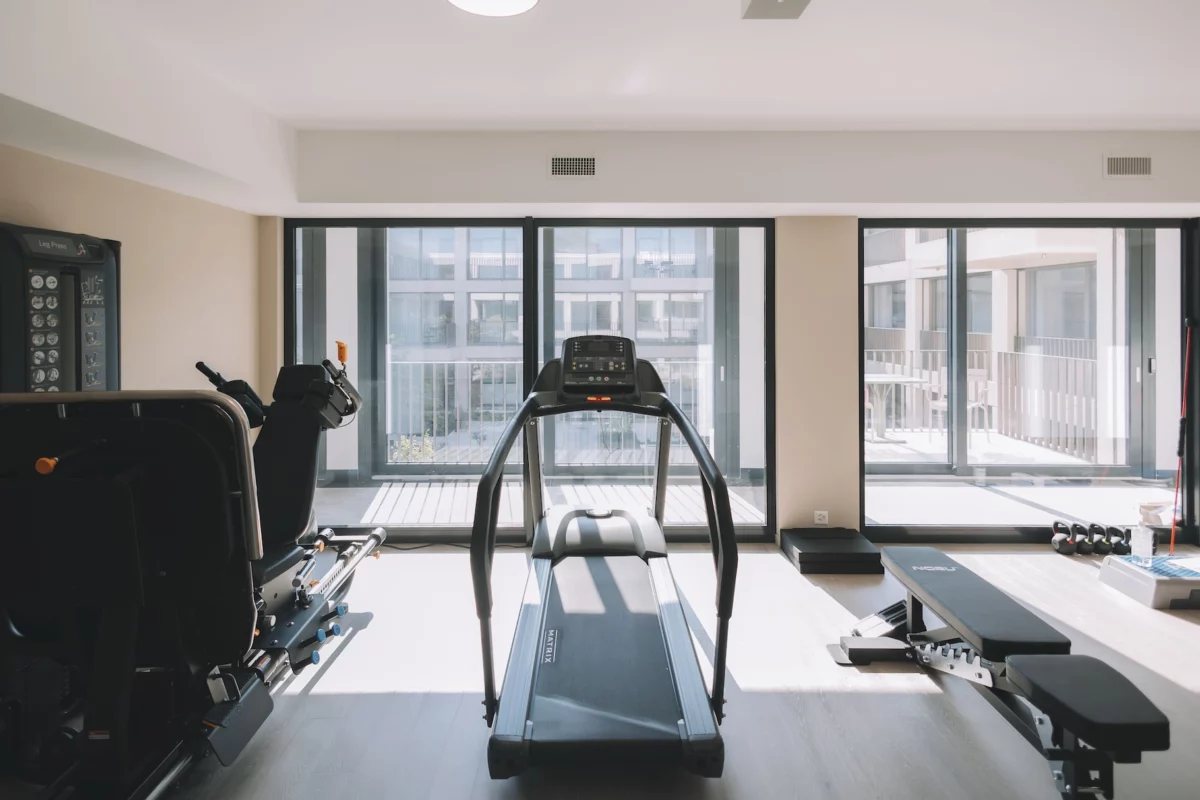
This article is based on the talk “Strength and longevity” given on Thursday 15 October 2026 at the Résidence du Parc des Crêts by ADPhysio Troinex, the physiotherapy practice located at the heart of the Residence. The presentation shown that day is available for download at the bottom of this page (in French).
Muscle is not just about appearance: it is an organ of health. And it is never too early, or too late, to take care of it.
Why strength protects
Two words to understand
- Strength training means working the muscles against resistance (body weight, resistance band, dumbbell, machine) progressively, to gain strength and muscle mass.
- Longevity is not just about living longer, but living better for longer: staying independent, mobile and active. We talk about years of life in good health.
What happens with age: sarcopenia
Sarcopenia is a slow, silent loss of muscle. Muscle mass peaks at around 30. Without training, we then lose 3 to 8% of it per decade. From 60 onwards, the loss speeds up, and strength declines even faster than mass.
What is muscle for?
Much more than lifting things:
- moving: getting up, walking, climbing stairs, carrying shopping;
- catching yourself: reacting quickly when you trip, to avoid a fall;
- protecting: supporting the joints, knees, hips, back;
- strengthening: by pulling on the bones, it makes them stronger;
- regulating: it is the body’s main “consumer” of sugar;
- feeling good: energy, mood, sleep and self-confidence.
What science shows
A little strength training goes a long way. According to a review of 16 major studies published in the British Journal of Sports Medicine in 2022, people who do strength training, with just 30 to 60 minutes a week, have a 15% lower risk of death. Adding walking, cycling or swimming brings the reduction to 40% compared with doing nothing.
Falls: a vicious circle that strength can break
Less strength, a fall, fear of falling again, and we move less… which leads to further loss of strength. Strong legs and good balance help you catch yourself, and keep the confidence to go out.
Bones: a living tissue
Bone gets stronger when it is put to work. Sitting or lying down for long periods, no longer carrying loads, and menopause without activity weaken it. Muscle pulling on it, carrying, pushing, lifting, walking and climbing stairs strengthen it. Even with osteoporosis, strength training is recommended, at the right dose and with support.
Getting started, whatever your age
At 90, muscle still responds
In a study carried out in Boston and published in JAMA in 1990, ten nursing home residents aged 87 to 96 did leg strength training for 8 weeks. Their strength almost tripled (× 2.7) and their walking speed increased by 48%; some even gave up their walking stick.
The best time is now
- Before 40: build up capital, muscle and bone, like savings for later.
- From 40 to 65: preserve, slowing down the loss that begins, especially around menopause.
- After 65: regain strength, balance and independence. Progress is quick.
How much? Less than you think
According to Swiss recommendations (Federal Office of Sport) and those of the WHO:
- twice a week, 20 to 30 minutes of strength training: legs, back, arms;
- move every day, about 30 minutes: brisk walking, cycling, swimming;
- a little balance work, a few minutes, several times a week.
Where and how? No need for a gym
- In everyday life: take the stairs, carry your shopping, garden, get up without using your hands.
- At home: a chair, a wall, a resistance band or two bottles of water.
- In a group: gentle gym, Pilates, aqua aerobics, motivating each other.
- With support: with a physiotherapist, to get started safely.
Four principles that make it work
- Enough effort: the last repetitions should be hard, but not painful.
- Progression: when it gets easy, increase the load, repetitions or difficulty a little.
- Regularity: two sessions a week, every week, are better than one big isolated effort.
- Your plate: enough protein at every meal to feed the muscle.
Five exercises to do at home
- Sit-to-stand: get up from a chair without using your hands.
- Wall push-ups: arms, shoulders and chest.
- Heel raises: calves, holding on to a chair.
- Resistance band rows: back and posture.
- Balance: one foot in front of the other, close to a support.
Guideline: 2 sets of 8 to 12 repetitions, twice a week. Always close to a stable support.
Precautions and contraindications
Almost everyone can get started, with a few rules.
Wait and see a doctor in case of chest pain, feeling unwell or unusual breathlessness, very high uncontrolled blood pressure, an unstable or recent heart problem, fever or acute infection, or a recent fracture or operation without the go-ahead.
Adapt, don’t give up:
- osteoporosis: supervised progression;
- osteoarthritis: adapted range of motion and load;
- diabetes, stable heart disease: ask for medical advice;
- eye problems (retina): avoid holding your breath;
- pain during exercise: change the exercise.
Common misconceptions
- “I’m too old.” In fact, muscle still improves at 90.
- “It’s dangerous for my back, my bones.” At the right dose, strength training protects and strengthens them.
- “I’ll get too muscular.” You mainly gain strength and independence.
- “Walking is enough.” It is excellent, but it does not replace strength training.
- “You need a gym.” A chair, a wall and a resistance band are enough.
What next?
At ADPhysio Troinex, at the heart of the Residence, the physiotherapists offer an assessment of strength, balance and mobility, followed by a tailor-made programme adapted to your health, your pain and your goals. The practice is open to everyone, residents as well as people living in Troinex and the surrounding area, and sessions are covered by basic health insurance (LAMal) on medical prescription.
More strength, more years.
Read also: the “Longevity and preventive health” talk of 24 September, on measuring biological age and oxidative stress.
Further reading
- Momma H. et al. Muscle-strengthening activities are associated with lower risk and mortality in major non-communicable diseases. Br J Sports Med, 2022.
- Fiatarone M.A. et al. High-intensity strength training in nonagenarians. JAMA, 1990.
- Sherrington C. et al. Exercise for preventing falls in older people living in the community. Cochrane, 2019.
- Watson S.L. et al. The LIFTMOR randomized controlled trial. J Bone Miner Res, 2018.
- Fragala M.S. et al. Resistance training for older adults: NSCA position statement. J Strength Cond Res, 2019.
- Swiss physical activity recommendations, FOSPO / FOPH (hepa.ch); WHO, 2020.