
Health & wellbeing
Sport, to add life to your years
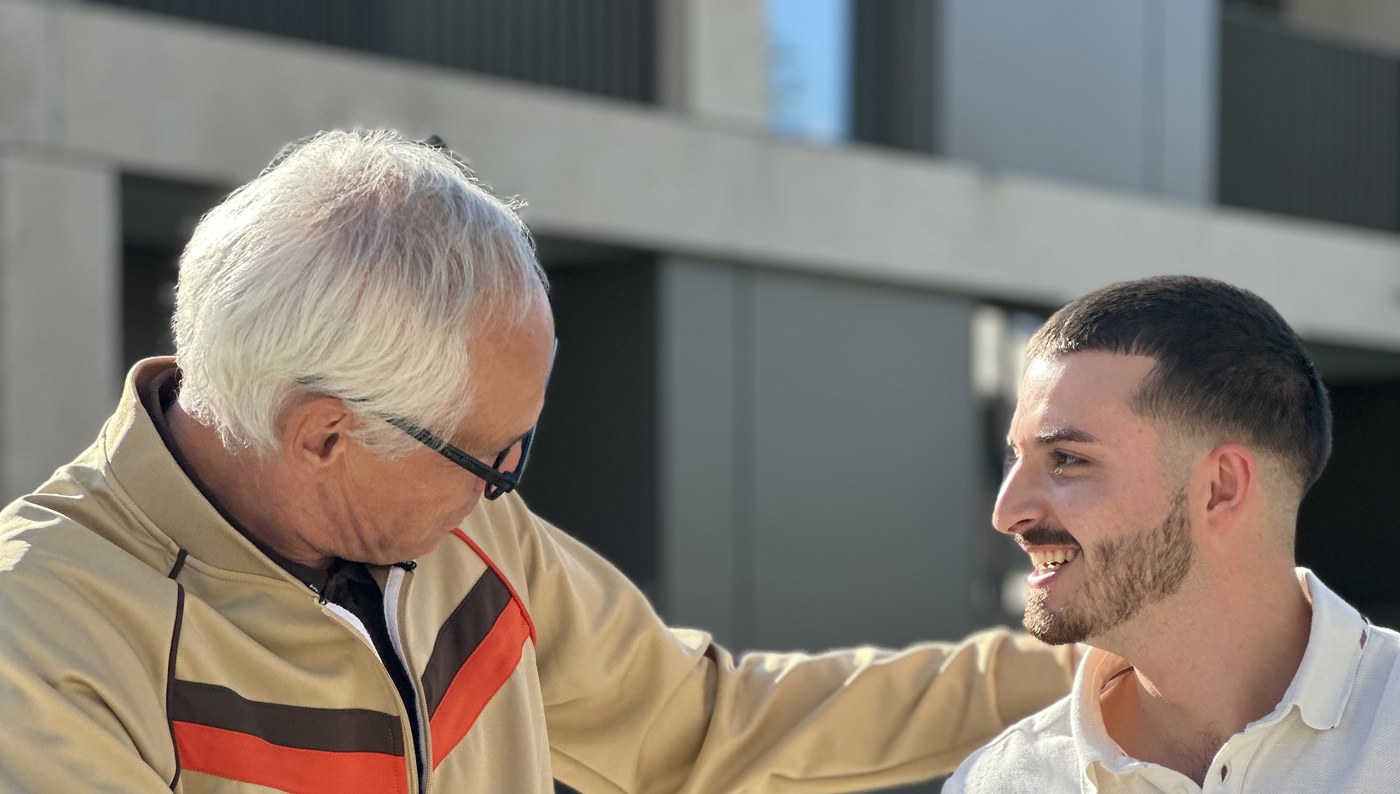
This article is based on the talk given on 16 May 2026 at the Résidence du Parc des Crêts by Corentin Goncalves, adapted physical activity (APA) coach. Residents discussed movement and independence; the presentation shown that day is available to download at the bottom of this page.
The question is simple: can sport really help us age better? Today, we live longer than before — life expectancy has risen sharply, thanks in particular to medical progress. But another question becomes essential: are we living those extra years in good health?
The point is not merely to add years to life. Above all, we want to add life to the years. And this is precisely where physical activity plays a major role: movement acts on the body, on the brain, on mood, on independence — and even on longevity.
Living longer, yes — but in good health
An ageing population is a genuine public-health challenge. In Europe, more than 20% of the population is already over 65. In 1960, that share was around 10%; in 2010, 17%; and projections for 2060 approach 30%. In other words, within a few decades, nearly one person in three will be over 65.
Yet living longer is not enough. The real challenge is quality of life: being able to keep walking, going out, seeing loved ones, preserving one’s independence and a satisfying social life. It is not just lifespan, but the lifespan lived in good health. And physical activity is arguably one of the most powerful tools for extending this period of independence.
Ageing does not necessarily mean declining
For a long time, ageing was seen as an inevitable decline. Studies now show that it is not age alone that weakens the body: lack of movement plays an enormous role. Some research even indicates that a physically active 70-year-old can have cardiovascular capacities comparable to those of a sedentary 50-year-old.
Ageing alone therefore does not explain everything. The problem is often the combination of ageing and inactivity. When we move less, we lose muscle, endurance and balance — and we gradually enter a vicious circle. Conversely, maintaining physical activity helps slow this decline and prolong independence.
What inactivity costs the body
Inactivity has very concrete consequences. The first is the loss of functional capacities, with a reduction in muscle mass — sarcopenia. From the age of 50, muscle mass and strength decrease significantly, which leads to:
- a drop in strength,
- difficulty walking,
- a loss of balance,
- and therefore a higher risk of falling.
And behind falls, we know the possible consequences: fractures, hospitalisations, loss of independence. Inactivity also increases the risk of cardiovascular disease, diabetes, osteoporosis and social isolation. Sitting for too long becomes a real factor of frailty.
The physical benefits of movement
Fortunately, physical activity acts directly on these mechanisms. Muscle strengthening helps maintain mass and strength — and gains can be achieved at any age, even a very advanced one. Suitable exercises also help improve mobility, strengthen the back and posture, make walking safer and consolidate the bones.
Regular walking and cycling — such as the exercise bikes freely available at the residence — build endurance, whether muscular (walking for longer) or cardiovascular. Sometimes very simple actions already have an enormous impact: walking a little more, taking the stairs, going out every day, moving regularly.
A protected heart and brain
Regular practice clearly reduces the risk of heart disease (by 20 to 35%) and of stroke (around 25%), and helps lower blood pressure. Importantly, these benefits exist even with moderate activity. For seniors, regularity often matters more than intensity.
The brain also benefits from movement. Active people have a lower risk of cognitive disorders and dementia, because exercise improves cerebral blood flow and neural connections and stimulates the memory areas. The most beneficial activities seem to be those that combine several dimensions: movement, coordination, balance — and social interaction.
How many steps a day?
For a long time, the target was 10,000 steps a day. Recent data qualifies this figure: a 2025 meta-analysis of more than 161,000 adults shows that the major benefits appear from 7,000 steps a day — a drop in overall mortality, in cardiovascular risk, in the risk of dementia, in depressive symptoms, and fewer falls.
Above all, every step counts: even between 3,000 and 4,000 steps a day, benefits are already observed. Beyond the age of 80, 4,000 steps represent about 30 minutes of daily walking. Enough to deliver an encouraging and realistic message.
Mood, sleep and social connection
Physical activity also has a strong effect on mental health: fewer depressive symptoms, less anxiety, better sleep and a reduced feeling of loneliness. Some studies show it can be as effective as mild to moderate antidepressant treatments. It also nourishes self-esteem and self-confidence — precious when going through a period of isolation.
Because the benefit does not come from exercise alone: social connection plays an enormous role. Taking part in a group activity means meeting people, exchanging, stepping out of isolation. Sometimes what motivates people to come is not the activity… it is the pleasure of being back with a group.
“Sometimes it is not only the exercise that heals, it is also no longer being alone.”
Sport and longevity
Regular physical activity reduces overall mortality by 20 to 35%, and some studies mention a gain of several years of life. But the point is not only to live longer: it is to live longer while staying independent — to keep walking, deciding, going out, living at home for as long as possible.
Which activities, and how much?
For seniors, we mainly recommend walking, cycling, muscle strengthening, swimming, gentle gymnastics, yoga or tai chi. The ideal is to combine endurance, strengthening, balance and flexibility — and, above all, to adapt the activity to the person. The best sport remains the one you enjoy enough to practise regularly.
The WHO recommends 150 to 300 minutes of moderate activity per week (about 30 minutes a day), with muscle strengthening at least twice a week. The message is reassuring: even small amounts are beneficial. Fifteen minutes a day is already enough to reduce the risk of mortality. Many people think it is “too late” to start — yet the benefits exist even when starting late.
At the Résidence du Parc des Crêts
Here, the goal is not performance, but maintaining independence and the pleasure of moving. We aim for 150 minutes of activity per week for everyone. Individual sessions work on mobility, strengthening, balance or outdoor walking; group sessions add the social and motivational dimension — dynamic gymnastics, floor work of the Pilates type for the core and flexibility, chair gym. The freely available bikes make it easier to fit movement into daily life.
Sport acts almost like a natural medicine: accessible, inexpensive, extremely effective. One phrase sums up the stakes well: if a medicine offered all the bio-psycho-social benefits of sport, it would be the best-selling one in the world.
It is never too late to start
Moving regularly preserves the body, protects the brain, improves mood and increases the chances of ageing in good health.
“It is never too late to start, but it is always too early to stop.”
Even after 70 or 80, getting moving again brings measurable benefits.
Download the presentation (PDF)